
Dr. Vivo Hair Clinic ✔ Verified
Beşiktaş, Turkey · 490 clinic reviews
9.2FlymediScore
Lead: Hair transplant, 13 years
TURSABESHRSMOH
Speaks EN · TR
Understand your options for fuller coverage where hair has thinned
Hair transplantation is surgery that redistributes existing follicles to improve coverage in areas affected by hair loss. It may help with established pattern baldness, but does not stop surrounding hair from thinning. A hair restoration surgeon examines the cause and progression of your hair loss, alongside donor density, before advising whether surgery is appropriate.
When considering a hair transplant abroad, you can compare clinics across Flymedi’s listed destinations. The surgeon’s role in the procedure, the proposed donor management plan, and support after returning home are useful comparison points. Flymedi brings clinic information together and offers coordinator support to help you explore options and organise enquiries.
Figures are ranges, not promises. Suitability needs an individual assessment by a doctor.
Each clinic sets its own price, so check what the price includes before comparing two of them.





Beşiktaş, Turkey · 490 clinic reviews
Speaks EN · TR


Şişli, Turkey · 888 clinic reviews
Speaks EN · FR +6
Send your details and a coordinator will tell you which clinics are appropriate for your case, and which are not.



Şişli, Turkey · 435 clinic reviews
Speaks EN · FR +6










Bangkok, Thailand · 15 clinic reviews
Speaks EN · TH






Şişli, Turkey · 48 clinic reviews
Speaks EN · SQ +14



Bağcılar, Turkey · 18 clinic reviews
Speaks AZ · BG +11






Ataşehir, Turkey · 60 clinic reviews
Speaks AZ · EN +6

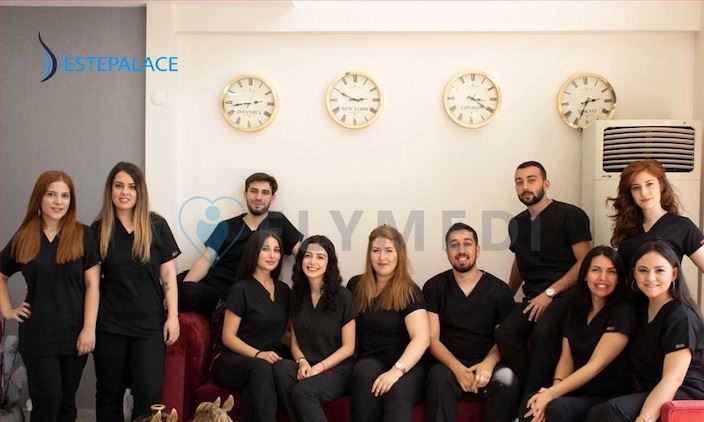

Istanbul, Turkey · 21 clinic reviews
Speaks RO · EN +7




Istanbul, Turkey · 15 clinic reviews
Clinics are scored and ordered by Flymedi. How ranking works.
Patients treated through Flymedi, in their own words. Nothing loads or plays until you press play.
Alex
Hair transplant
Spoken in EnglishSource: YouTube
Mark Chambarlein
Hair transplant
Spoken in EnglishSource: YouTube
Sheoni & Jayden
Hair transplant
Spoken in EnglishSource: YouTube
Victor
Hair transplant
Spoken in EnglishSource: YouTube
Anıl Chopra
FUE hair transplant
Spoken in EnglishSource: YouTube
Youssef
Rhinoplasty
Spoken in EnglishSource: YouTube
Laura
Dental implants
Spoken in EnglishSource: YouTube
Louren
Gastric sleeve
Spoken in EnglishSource: YouTube
Josephine Nyella
Limb lengthening surgery
Spoken in EnglishSource: YouTube
Damon
Gynecomastia
Spoken in EnglishSource: YouTube
A hair transplant moves hair follicles from a donor area, usually the back and sides of the head where hair is genetically resistant to thinning, into areas that have thinned or gone bald. The follicles are taken one by one (FUE and DHI) or as a narrow strip of scalp (FUT) and placed in small incisions at the angle and direction of natural growth. It is a surgical procedure, done under local anaesthetic, that usually takes most of a day.
It redistributes the hair you already have. It does not create new hair and it does not stop the natural hair around the grafts from thinning, which is why medical treatment is usually discussed before surgery and continued afterwards. The transplanted hair sheds in the first weeks and regrows over the following months.
Pattern hair loss, or androgenetic alopecia, is the reason most people consider a transplant. It is driven by an inherited sensitivity of the follicles to androgen hormones, it is progressive, and it is common: most men show some degree of it by middle age, and it affects a large minority of women. Hair loss caused by stress, illness, iron deficiency, thyroid disease, medication or a scarring scalp condition is a different problem, and it needs a diagnosis rather than a graft count.
A transplant helps when the loss is patterned and stable, the donor area at the back and sides is dense, and the aim is coverage and density rather than a full head of hair. It does not create new hair; it redistributes what you already have. Its outcome depends more on the surgeon who plans and performs it than on the technique or the country. Flymedi's clinic network spans several countries, including Turkey, Mexico, Thailand and Colombia; the listing on this page shows what each clinic offers, and the sections below tell you what to ask them.
While a hair transplant is a highly effective solution, it is not suitable for everyone. A thorough consultation is necessary to determine your candidacy. Generally, you are an ideal candidate for the procedure if you meet the following criteria:
Most people considering a hair transplant should be on medical treatment first, or should at least have discussed it with a doctor. Surgery moves the follicles you have; it does nothing for the ones you are still losing. Two treatments have the largest evidence base: minoxidil, applied to the scalp, and finasteride, taken by mouth and prescription-only in most countries.
Minoxidil widens the blood vessels around the follicle and prolongs the growth phase of the hair cycle. For some people it slows loss and produces partial regrowth of fine hair; it works only while it is used, and the first weeks can bring temporary extra shedding. Finasteride blocks the conversion of testosterone into dihydrotestosterone, the hormone that miniaturises follicles in pattern loss. It slows or halts progression in most men who take it and produces some regrowth in a proportion of them; stopping it lets the loss resume. It is not prescribed for women who may become pregnant.
Finasteride has side effects, and they are part of the decision: sexual side effects such as reduced libido and erectile difficulty, breast tenderness, and mood changes including low mood, which regulators have added to the product warnings. Most are uncommon and resolve on stopping; a small number of men report persistent symptoms. Discuss your history with a doctor before starting it.
The two treat different ground from surgery. A transplant covers the area that is already bald; medication acts on the native hair around it, including the hair the transplant will never reach. Someone who has a transplant and treats nothing else will keep losing native hair around the grafts, and the result at five years can look worse than it did at twelve months. That is why most surgeons want a patient on treatment before and after surgery. Neither drug is something to start from a web page: both need a doctor's assessment, and finasteride needs a prescription.
The Norwood scale, also called Hamilton-Norwood, is the standard way of describing male pattern hair loss, and it is how most consultations begin. It runs from stage I to stage VII. Female pattern loss follows a different shape and is graded on the Ludwig scale; the hair transplant for women page covers that assessment.
Graft requirements rise with the stage. The guidance further down this page, roughly 1,500 grafts for hairline work up to more than 5,000 for extensive baldness, maps onto it: the early stages sit at the lower end, the middle stages in between, and stages VI and VII at the top of that range or beyond what a single donor area can supply. Treat any figure as an indication; only an examination of your donor area and of the region to be covered produces a real number.
The stage matters more than how you look today, because it is a point on a progression. A stage III at twenty-five with a family history of extensive loss is a different clinical problem from a stage III at fifty whose loss has stopped, and the plan for each is different. That is the subject of the next section.
You have a lifetime supply of grafts, not an unlimited one. The safe donor zone is the band of hair across the back and sides that is genetically resistant to pattern loss. Its size and density vary from person to person, and once a follicle is harvested from it nothing grows back in its place. Every graft used today is one that is not available in ten years.
This is why a good surgeon plans for the hair you will lose, not only the hair you have already lost. Filling a hairline densely at twenty-eight with no allowance for a crown that will thin at forty is how results go wrong slowly: the front looks finished and the back runs out of supply. A second procedure is common and is not a failure; many patients return years later as the native hair around the first result continues to thin. It only works if the first surgeon left something to come back for.
Beard hair and, less often, body hair can extend the supply in some patients. Those grafts have a different texture and growth cycle and lower survival, so they are used to add bulk behind a hairline rather than to build one. The donor limit is also the reason to be sceptical of a very high graft count quoted cheaply: the number may be inflated, the grafts may be split, or the donor area may be overharvested to reach it.
The outcome of a hair transplant depends more on the surgeon than on the technique or the country. Technique is a tool; the design of the hairline, the angle of every incision and the handling of the grafts are the surgeon's, and they are what you are paying for. These are the questions that separate clinics, and almost nobody asks the first one.
Graft count is the first driver: a large session costs more than a small one at the same clinic, which is why a serious quote follows an assessment of your donor area rather than preceding it. Technique is the second: FUE and DHI take more surgical time than FUT and usually cost more. After that come whether the surgeon or a technician performs each step, whether PRP or other adjuncts are bundled in, whether a second session is planned, what aftercare and follow-up are included, and whether medication is included.
Each clinic sets its own price, and a headline figure means little until you know what it includes, so check before comparing two of them. What usually sits outside a package: flights; meals and personal expenses; extra hotel nights if you arrive early or stay longer; medication and supplies beyond the basic aftercare kit once you are home; and travel insurance that covers medical complications, which is worth buying. A very low headline price usually means a lower graft count, a technician-led procedure or exclusions that appear later, not a bargain.
Flymedi does not publish indicative price bands by graft count on this page. The starting price at the top of the page and the figure on each clinic card come from the clinics' current listings and carry their basis, so you can see what each does and does not include.
A poor result is usually a design or handling problem rather than a failure of the technique. It looks like a hairline set too low or too straight for the face; grafts placed at the wrong angle or direction, so the hair grows against its neighbours; a pluggy, tufted appearance or pitting where grafts sit at the wrong depth; a donor area so overharvested that it shows through short hair; or simply far less density than was promised. Shock loss is not a poor result: it is the expected shedding in the first weeks, explained in the questions below.
Revision is possible but constrained. Fixing a hairline means removing or recycling grafts, and adding density means spending donor grafts that cannot be replaced. Some problems can be improved considerably; an exhausted donor area cannot be restored.
Recourse across borders is the hard part. Who do you go back to? Ask before you travel what the clinic's aftercare commitment covers and for how long, who reviews your photographs at the follow-up points it names, whether a doctor will see you in person if the result is unsatisfactory, and whether a revision session is included or charged. Get it in writing, with the surgeon's name, the graft count, the technique and who performs the extraction and the implantation. A clinic that will not put its commitment in writing before the procedure is unlikely to honour one after it.
Photos supplied by the clinics that performed the treatment, with patient consent. Each photo is credited to its clinic.
Reviews left by patients treated through Flymedi for this treatment. Each one is written in the patient's own language.
D.· FUE hair transplant✓ Verified
5.0 · 30 June 2026
My main issue was severe thinning on the vertex/crown area while my front hairline was mostly okay. Dr. VIVO’s team performed a Sapphire FUE session paired with PRP therapy to boost the existing follicles. The clinic facility is super modern and squeaky clean, felt like a high-end private medical center. 4 months in and the crown area is filling in nicely with no visible scarring at the back. Worth every single penny! 👍
I.· Eyebrow transplant✓ Verified
5.0 · 19 May 2026
I over-plucked my eyebrows for years in the 2000s and they never grew back properly. I booked an eyebrow transplant with Dr. VIVO after reading great things on Flymedi. The procedure was surprisingly quick and painless, and the shaping work done by the specialist was pure art. The tiny scabs healed within a week and now I have naturally full brows without needing pencil every morning! Absolutely over the moon with the results.
L.· Mustache transplant✓ Verified
5.0 · 16 April 2026
Had a beard transplant at Dr. VIVO Hair Clinic about 5 months ago because my facial hair was super patchy on the cheeks. The medical team was very precise when placing each graft to follow the natural direction of my beard growth. The hotel stay was very comfortable and aftercare support on WhatsApp kept answering all my random questions quickly. Now my beard looks thick and full, honestly best decision I've made in years.
S.· DHI hair transplant✓ Verified
5.0 · 12 March 2026
As a woman dealing with hair thinning along my partition, finding a clinic that understood female hair restoration was crucial. The team at Dr. VIVO used an unshaven DHI method so I didn’t have to cut all my hair off for the procedure! The staff was incredibly gentle and the interpreter was with me through every single step. My density has improved so much after 8 months and my confidence is finally back. Thank you so much for everything!
625 reviews
Answers from the medical content team, reviewed by the medical reviewer named on this page.
Written by Akya Karahan, Junior Content Marketing Specialist at Flymedi. Medically reviewed by Dr. Mehmet Dogruer. Content updated 29 July 2026. Next scheduled review 29 July 2027.
This page is general information, not personal medical advice. It does not diagnose you and it does not replace an individual assessment by a doctor who has examined you.
Found something wrong or out of date on this page? Tell us and we will check it. Editorial standards and reviewer list: authors and reviewers.
Tell us about your case and a coordinator matches you with clinics that fit it.


